40th Tango Community meeting at ALBA
Maxwell Auditorium
ALBA Synchrotron
40th Tango Community meeting at ALBA
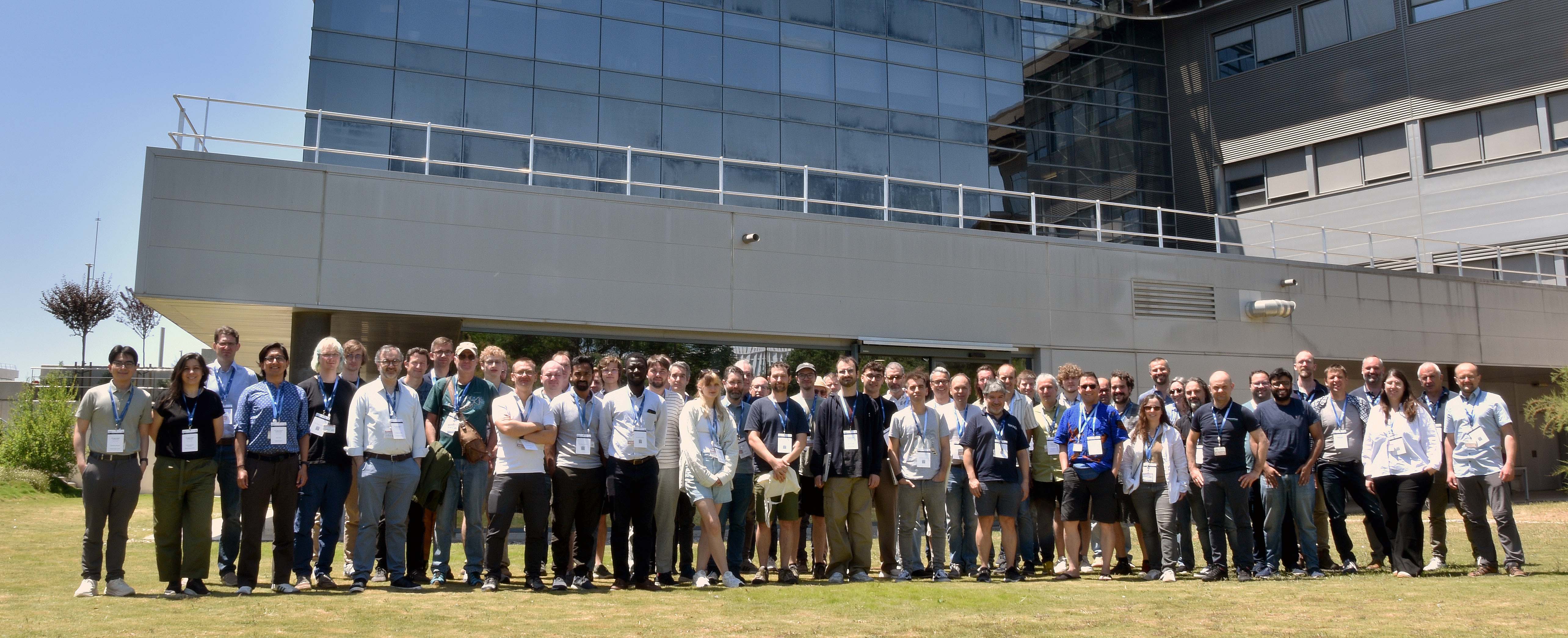
Tango Controls is a free open source device-oriented controls toolkit for controlling any kind of hardware or software and building SCADA (supervisory control and data acquisition) systems.
The meeting is hosted in a hybrid mode by ALBA Synchrontron.
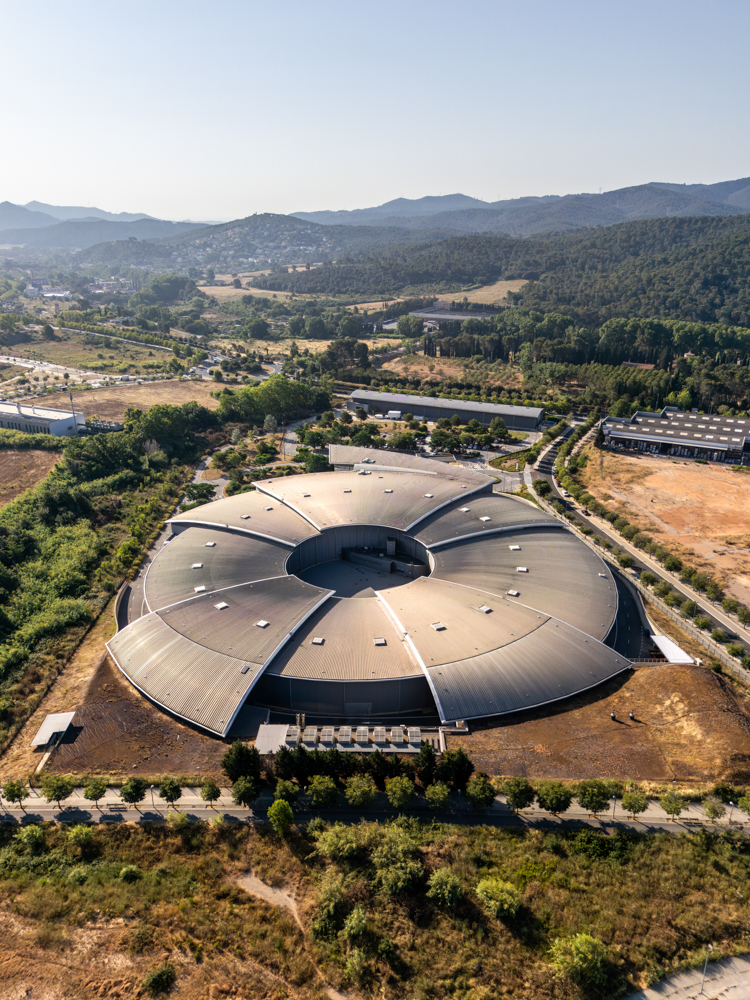
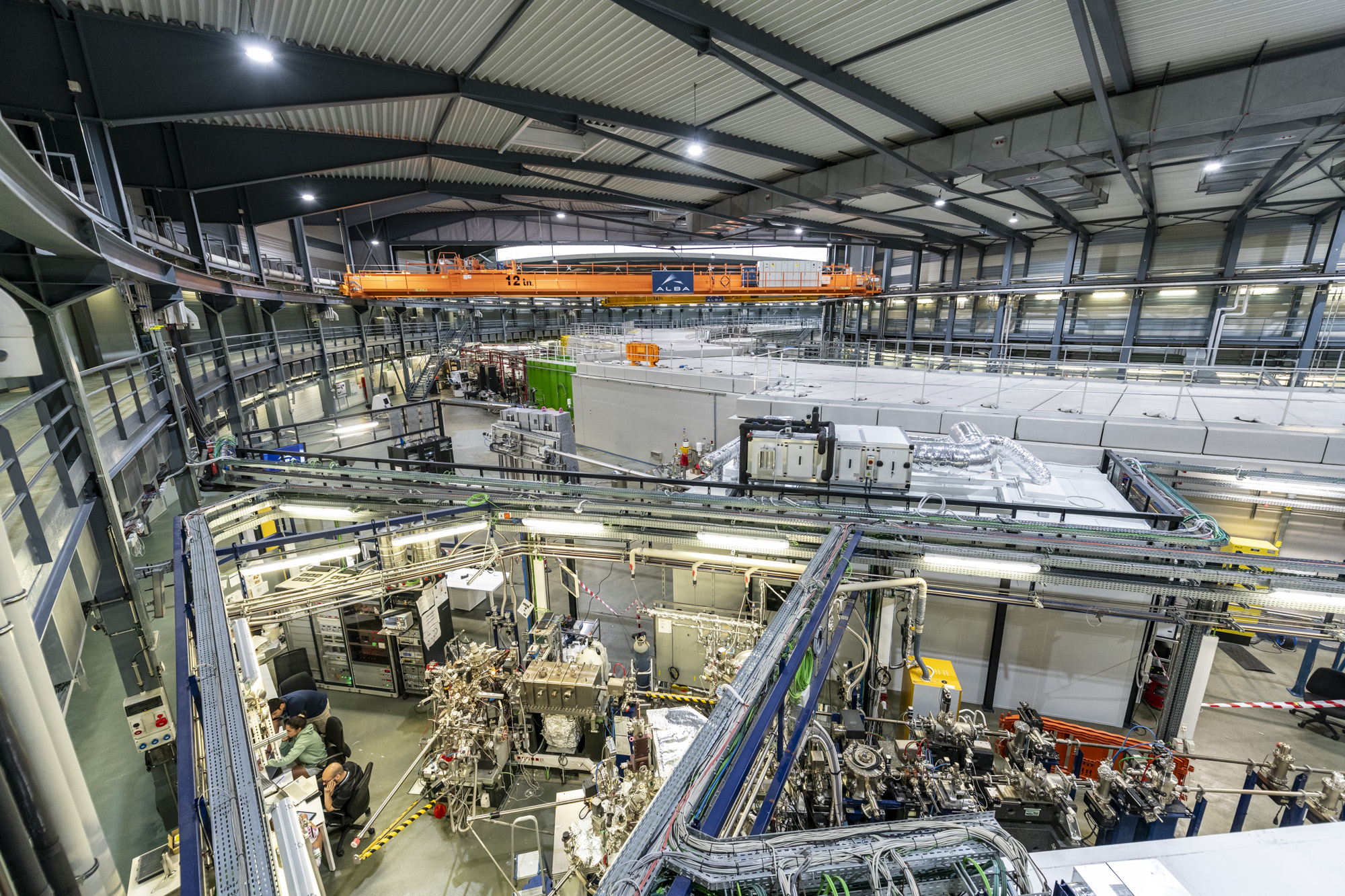
The ALBA Synchrotron is a large research infrastructure, located in Cerdanyola del Vallès (Barcelona). It is a fundamental pillar of the Spanish and European research arena, offering to academic and industrial users a wide variety of state-of-the-art instrumentation.
 |  |
Dates: June 8 - 12, 2026
- Tango Meeting:
- June 8 and 9 - whole day sessions
- June 10 - morning only sessions and visit to the ALBA Synchrotron in the afternoon
- Satellite Workshops - whole day sessions
- Archiving and Databases: June 11
- Sardana: June 11 and 12
Location: Cerdanyola del Valles, Barcelona, Spain
Welcome to the 40th Tango Community Meeting at ALBA. We are excited to bring together our international community for a full week of inspiring sessions and networking opportunities in the beautiful town of Cerdanyola del Vallès located near to Barcelona.
-
-
1
Tango Meeting: Registration Maxwell Auditorium
Maxwell Auditorium
ALBA Synchrotron
Carrer de la Llum 2-26 08290 Cerdanyola del Vallès, Barcelona, Spain -
2
Tango Meeting: Welcome Maxwell Auditorium
Maxwell Auditorium
ALBA Synchrotron
Carrer de la Llum 2-26 08290 Cerdanyola del Vallès, Barcelona, SpainSpeaker: Zbigniew Reszela (ALBA Synchrotron) -
3
From ALBA to ALBA II Maxwell Auditorium
Maxwell Auditorium
ALBA Synchrotron
Carrer de la Llum 2-26 08290 Cerdanyola del Vallès, Barcelona, SpainFrom ALBA to ALBA II. The invited talk given by the ALBA director.
Speaker: Dr Caterina Biscari (ALBA Synchrotron) -
4
Practical Information Maxwell Auditorium
Maxwell Auditorium
ALBA Synchrotron
Carrer de la Llum 2-26 08290 Cerdanyola del Vallès, Barcelona, SpainSpeaker: Zbigniew Reszela (ALBA Synchrotron) -
Facility Status Reports Maxwell Auditorium
Maxwell Auditorium
ALBA Synchrotron
Carrer de la Llum 2-26 08290 Cerdanyola del Vallès, Barcelona, Spain-
5
SKA Status Update
Construction activities across the SKA Observatory are accelerating as we work toward key delivery milestones. In my previous update, I shared the first image produced by the SKA-Low telescope in Australia. Since then, significant progress has been made toward achieving a comparable milestone for the SKA-Mid telescope. Most notably, SKA-Mid has successfully demonstrated fringes and phase closure - two fundamental interferometric capabilities required for imaging - representing a major step forward. We are now truly realising the vision of “One Observatory, Two Telescopes, Three Continents.” In parallel, engagement with the scientific community has increased, providing valuable feedback that is helping to shape expectations and refine system capabilities. Software remains central to this progress, with substantial effort supporting and advancing the Tango-based Telescope Control System. This talk will highlight recent milestones, developments in the control system, community engagement, and the challenges encountered on the path to delivering an operational observatory.
Speaker: Samuel Twum (SKAO) -
6
Towards SOLEIL II, status of the project
Since its commissioning in 2008, SOLEIL [1] has provided users with access to a broad portfolio of experimental techniques across 29 beamlines, spanning an energy range from infrared to hard X-rays. To meet the evolving needs of the scientific community and society at large, SOLEIL is now engaged in a major upgrade — the SOLEIL II project [2] — which formally entered its construction phase in January 2025.
This presentation offers a comprehensive overview of the project: its organisation, core objectives and scheduling strategy, together with the technical and organisational challenges being tackled across its four programmes — the construction of the new accelerator, the relocation and adaptation of beamlines, the preparatory work on infrastructure and logistics, and a dedicated focus on the overhaul of the information system.Speaker: yves-marie abiven (synchrotron SOLEIL) -
7
Progress at HI-Jena
Short overview about Tango and Sardana activities at HI-Jena during last year including:
- HIJ-pyVision as tailored camera-analysis GUI app for laser labs
- FAIR data workflow
- Sardana enhancement for high intensity laser labs
- Web overview for experiments
Speaker: Alexander Kessler (HI-Jena)
-
5
-
10:45
Coffee break Tents
Tents
-
Facility Status Reports Maxwell Auditorium
Maxwell Auditorium
ALBA Synchrotron
Carrer de la Llum 2-26 08290 Cerdanyola del Vallès, Barcelona, Spain-
8
SOLARIS status report
This status report covers a comprehensive status update on the current state of the Controls Group of the SOLARIS synchrotron. The report reviews recent upgrades and maintenance activities aimed at improving system stability, automation, and user accessibility. Particular attention is given to systems migration and refactored rpm packaging. Finally, the report outlines ongoing new developments, planned improvements, and future works for the SOLARIS control environment.
Speakers: Michal Piekarski (SOLARIS), Urszula Jachymczyk (NSRC SOLARIS, Jagiellonian University) -
9
Upgradation and Modernization of the Tango based GMRT Control (TGC) System.
Upgradation and Modernization of the Tango based GMRT Control (TGC) System.
Jitendra Kodilkar 1 , Raj Uprade 1, Bhavesh Kunbi 1, Mayur Bhagade 2, Isha Gothwad 3, Anil Raut 1, Ishwara Chandra 1, Yogesh Wadadekar 1, Yashwant Gupta 1
1 National Centre for Radio Astrophysics, Pune University Campus, Pune, India.
2 Government College of Engineering & Research, Avasari Khurd, Pune, India
3 S. B. Jain Institute of Technology Management & Research, Nagpur, IndiaThe Giant Metrewave Radio Telescope (uGMRT), operated by the NCRA-TIFR, India, is a pioneering Low Frequency Radio Interferometer & Beam-former Telescope which consists of 30 parabolic antennas spread over ~30 km in diameter. The uGMRT upgraded its legacy Control & Monitoring system from the 1990s by implementing the Tango-based GMRT Control (TGC) system, which has been in operation since 2019. The GMRT serves as a pathfinder for the SKA Telescope-Manager work-package, validating key design concepts such as a supporting hierarchical, specification-driven control nodes, dynamic sub-arrays, and a role-based User Interface along with the PANIC based alarm management, and HDB++ based archiving system.
The Local Monitoring & Control (LMC) system was initially developed a decade ago using Tango 9.2.5, Python 2.7, PyQt 4.8, and Taurus 3.7 on Linux Ubuntu 16.04 OS platform, which underwent several upgrades. The previous mid-term updates ported it to Ubuntu 20.04 while retaining the legacy version of Tango-Framework. With the obsolescence of Python 2, PyQt4, and older OpenJDK-8- 8 Java version, a major modernization is performed on Ubuntu 24.04 OS using the CONDA Package-Manager environment. The upgraded system now uses Tango 9.4, Python 3.9, PyQt 5.12 /Taurus 5.2, and OpenJDK-17, ensuring long-term maintainability, stability, and compatibility without altering legacy functionality.
The migration involved extensive manual and automated code transformations. Python scripts and GUIs were converted using tools such as ‘2to3-3.9’ and ‘pyqt4topyqt5’ converters, with addressing challenges by manually editing codes such as a indentation syntax, UTF-8 handling, signal & Event method changes, and variety of functionality gaps. Java code migration to OpenJDK-17 required updating dependencies, including Hibernate-ORM and Jython libraries, optimizing Data-base fetch strategies, resolving class-paths conflicts, ANTLR library issues, and authentication challenges. The CONDA environment facilitated installation and testing of around 90 software packages, including compilers, database tools, Tango libraries, and GUI frameworks. This approach was preferred over other package managers such as UV/Pixi for reproducibility, isolation, and dependency control.
Upgrades also stabilized the GMRT Aggregation or Sub-array Control Nodes, improving Mean Time Between Failures (MTBF) by addressing Tango client-server disconnections and incomplete database transactions issues. The system now supports more reliable astronomical observations and technical tests. Overall, this modernization ensures that GMRT’s TGC system remains robust, secure, and compatible with modern Tango frameworks while maintaining full legacy support.
Speaker: Mr Jitendra Kodilkar (National Centre For Radio Astrophysics, Tata Institute of Fundamental Research, Tata Institute of Fundamental Research) -
10
LOFAR 2.0 Station Control
A status update on the usage of TANGO Controls in LOFAR 2.0 Station Control and beyond.
Speaker: Hannes Feldt -
11
ESRF Status Report
Status report of ESRF, regarding usages of Tango here, what challenges are we facing with Tango, how we manage it, its development and deployment workflows, and more to be defined.
Speaker: Théo Rozier (ESRF) -
12
LULI Tango Status Report
This presentation provides a quick update on the status of the LULI facilities. The LULI (Laboratoire pour l’Utilisation des lasers intenses) is located 20 km SW from Paris and operates 3 different facilities: LULI2000, Apollon and Hera. The facilities provide high energy or high power laser beams which interact with gas or solid targets. We will refresh the previous status and the current ones with milestones and Command-Controls & Supervision team’s developments.
Speaker: Stéphane Marchand (CNRS/LULI) -
13
ALBA Controls Status Update
This presentation provides an update on the status of the ALBA Controls System and the activities of the Controls Section. It will review recent developments, operational status, ongoing improvements, and current priorities in supporting ALBA accelerator and beamline operations. The talk will also outline key challenges and future directions, including initial perspectives and preparation activities related to the ALBA II project.
Speaker: Zbigniew Reszela (ALBA Synchrotron)
-
8
-
14
Group photo Maxwell Auditorium
Maxwell Auditorium
ALBA Synchrotron
Carrer de la Llum 2-26 08290 Cerdanyola del Vallès, Barcelona, Spain -
13:00
Lunch break Tents
Tents
-
Tango Reloaded: New Features & Live Demos Maxwell Auditorium
Maxwell Auditorium
ALBA Synchrotron
Carrer de la Llum 2-26 08290 Cerdanyola del Vallès, Barcelona, SpainBased on the survey conducted among meeting participants, we have organized a session dedicated to live demonstrations of recently introduced and lesser-known Tango features. This session will feature live demos led by Tango kernel developers, including:
- "Preparation of the development environment." by Benjamin Bertrand
- "Highlighting of the best practices in Tango DS development (programming language agnostic)." by Sergio Rubio Manrique
- "PyTango device server development." by Anton Joubert
- "cppTango device server development." by Thomas Braun
- "Event system performance monitoring." by Thomas Ives
-
15
Preparation of the development environment using PixiSpeaker: Benjamin Bertrand (MAX IV Laboratory)
-
16
Tango Device Classes, Design and Best PracticesSpeaker: Sergi Rubio Manrique (ALBA Synchotron)
-
17
PyTango device server developmentSpeaker: Anton Joubert (MAX IV Laboratory)
-
15:45
Coffee break Tents
Tents
-
Tango Reloaded: New Features & Live Demos Maxwell Auditorium
Maxwell Auditorium
ALBA Synchrotron
Carrer de la Llum 2-26 08290 Cerdanyola del Vallès, Barcelona, SpainBased on the survey conducted among meeting participants, we have organized a session dedicated to live demonstrations of recently introduced and lesser-known Tango features. This session will feature live demos led by Tango kernel developers, including:
- "Preparation of the development environment." by Benjamin Bertrand
- "Highlighting of the best practices in Tango DS development (programming language agnostic)." by Sergio Rubio Manrique
- "PyTango device server development." by Anton Joubert
- "cppTango device server development." by Thomas Braun
- "Event system performance monitoring." by Thomas Ives
-
18
PyTango device server development (ii)Speaker: Anton Joubert (MAX IV Laboratory)
-
19
cppTango device server developmentSpeaker: Thomas Braun (byte physics e.K.)
-
20
Event system performance monitoring.Speaker: Thomas Ives (Observatory Sciences Ltd)
-
1
-
-
Core Components Status Reports and Ongoing Developments Maxwell Auditorium
Maxwell Auditorium
ALBA Synchrotron
Carrer de la Llum 2-26 08290 Cerdanyola del Vallès, Barcelona, Spain-
21
cppTango: Status update
We guide you through the changes in cppTango in the last year and what is upcoming.
Speaker: Thomas Juerges (SKAO) -
22
Configurable Deadbands for Warning and Alarm Levels in cppTango
Tango attributes often fluctuate around warning/alarm thresholds due to noise, quantization, or control-loop oscillations, causing repeated state changes, event floods, and noisy alarm logs. This leads to operator overload and unreliable statistics, while the only current mitigation is widening thresholds and losing sensitivity to real trends. We implement hysteresis around warning and alarm limits so that once an attribute enters a warning/alarm state, it only exits after moving back into the safe region beyond the configured margin.
Speaker: Alessio Igor Bogani (Elettra Sincrotrone Trieste) -
23
Device level dynamic attributes: Current state of development
We report on the status of the work to get device level dynamic attributes support working.
Speaker: Thomas Braun (byte physics e.K.) - 24
-
25
Runtime configuration for OpenTelemetry
OpenTelemetry support was added to cppTango and PyTango in version 10.0.0, but a major limitation is that you have to start your device server with telemetry enabled. There is no way to turn it on or off later, at runtime.
In cppTango and PyTango 10.3.0, we have improved this. This talk will show some examples, as well as discuss the new API, the limitations, and future plans. The main focus is usage from PyTango.
Speaker: Anton Joubert (MAX IV Laboratory) -
26
Taurus Status
This presentation will review the latest developments in the Taurus projects (
taurusandtaurus_pyqtgraph), focusing on the recent 5.3 and 5.4 releases.The talk will cover the completion of the main Taurus Performance Optimization (TPO) roadmap, including the integration of Tango asynchronous event subscription modes and improvements in polling fallback handling and GUI startup behavior. We will also discuss new ideas and future directions to continue improving performance in large-scale GUIs.
Additional topics include the migration from
guiqwttoplotpyfor 2D widgets, updates in Taurus GUI customization and color policies, and the current status of the Taurus ecosystem and roadmap.Speaker: Oriol Vallcorba (ALBA Synchrotron)
-
21
-
10:45
Coffee break Tents
Tents
-
Core Components Status Reports and Ongoing Developments Maxwell Auditorium
Maxwell Auditorium
ALBA Synchrotron
Carrer de la Llum 2-26 08290 Cerdanyola del Vallès, Barcelona, Spain-
27
Tango server code generation (Pogo?)
Proposal to redefine code generation for device servers in Tango.
Speaker: Damien Lacoste -
28
TangoDatabase: Latest Development
We will present the latest developments in the TangoDatabase.
Speaker: Thomas Braun (byte physics e.K.) -
29
Modernizing Starter: parallel startup, configurable server arguments, and more
Starter is the Tango device server that supervises every other Tango device server running on a host — the backend behind Astor. This short talk presents three lines of modernization work and one experimental side project.
Speaker: Alessio Igor Bogani (Elettra Sincrotrone Trieste) -
30
HDB++ status report
News on HDB++ recent developments
Speaker: Damien Lacoste -
31
Status of the TANGO Archiving System at SOLEIL
The SOLEIL synchrotron has been operating a TANGO-based archiving system continuously since 2006. This system is a critical component of the control infrastructure and is composed of two complementary services:
- A historical archiving service (HDB/TDB) designed for the long-term storage of continuous time-series data from TANGO attributes
- A snapshot archiving service dedicated to the on-demand storage of selected attributesThese services are intensively used by the accelerators, the 29 beamlines, and five laboratories control systems.
Historically, the archiving framework supported backend storage using either MySQL or Oracle relational databases, with Oracle being the primary solution deployed at SOLEIL. Due to increasing licensing costs and long-term sustainability concerns, a decision was made to migrate away from Oracle toward an open-source alternative.
The target solution was selected based on several key constraints and requirements: strong in-house expertise in relational databases and Java, the need for a transparent migration without service interruption, compatibility with existing TANGO archiving tools, and forward compatibility with the planned SOLEIL II upgrade. In this context, PostgreSQL coupled with TimescaleDB was selected as the new backend technology. The migration strategy is based on adopting the HDB++ database schema, while preserving the existing software stack and operational workflows.
This contribution presents:
- An overview of the current usage and operational scale of the SOLEIL TANGO archiving system
- The ongoing migration of the HDB/TDB historical archiving services to TimescaleDB
- The initial phase of the migration of the snapshot archiving service to PostgreSQL
Speakers: Alexandre Tison (Synchrotron SOLEIL), Gwenaëlle Abeillé (Synchrotron SOLEIL), Raphaël GIRARDOT (SOLEIL) -
32
Archiving Sardana elements
Archiving Sardana elements (like Motors and PseudoMotors) is important for full operational context. Data from devices that participate in a scan is stored in the scan files, but other components of a setup are only updated when explicitly read. For example, motors which are used for optics alignment, can drift over time because of fluctuations of environmental parameters like temperature and humidity. But these changes can affect experiment results and data quality.
The main difficulty is that standard Tango polling can't be used for this task. It creates situations where scan-critical devices and other elements share the same internal locks, which can degrade performance of even disrupt ongoing scan.
This presentation explores an approach to avoid this bottleneck, using the example of IcePAP motors and PseudoMotors, and invites further discussion of the issue.
Speaker: Dmitry Egorov -
33
SKA-Low growing pains
A zoom in on the state of the SKA-Low Tango deployment and some of the issues we're working through as we scale up.
Speaker: Alexander Hill (CSIRO)
-
27
-
13:05
Lunch break Tents
Tents
-
Community Device Classes, Tools, and Applications Maxwell Auditorium
Maxwell Auditorium
ALBA Synchrotron
Carrer de la Llum 2-26 08290 Cerdanyola del Vallès, Barcelona, Spain-
34
Sardana Status
This presentation will cover the latest developments in the Sardana project and its community, including the new Sardana 3.7 release.
Current work is focused on improving Continuous Scans with support for multiple synchronization descriptions and trigger hierarchies, together with developments related to trajectory integration and shutter control. Additional improvements include enhancements to the MacroServer environment management, measurement group configuration, recording infrastructure, performance, and stability.
The presentation will also summarize ongoing developments and future plans within the Sardana community.
Speaker: Oriol Vallcorba (ALBA Synchrotron) -
35
TANGO administration tooling and database monitoring
The TANGO control system is widely used at SOLEIL, yet its administration and operational tooling remain limited, leading to increased complexity in deployment, maintenance, and incident response. This work presents practical developments carried out at Synchrotron SOLEIL to address these challenges.
First, we will introduce Castor, a deployment and orchestration tool designed to simplify TANGO device management. Based on structured configuration files (CSV, YAML, JSON), Castor enables automated deployment and removal of devices, as well as controlled startup and shutdown procedures. This approach reduces manual intervention, improves reproducibility, and enhances operational reliability.
Second, we will explore a monitoring strategy for the TANGO database using Debezium, a change data capture (CDC) platform that tracks real-time modifications in the database using Apache Kafka and Java. By capturing and analyzing these changes, we demonstrate how such a system can significantly improve incident detection and response times.
We will also share the patching we have performed to the TANGO database device to ensure compatibility with Debezium, enabling reliable change data capture and addressing key integration challenges. These findings may provide insights into potential improvements for the TANGO ecosystem.
Speakers: Alexandre Tison (Synchrotron SOLEIL), Gwenaëlle Abeillé (Synchrotron SOLEIL) -
36
MAX IV Tools: tango-takeoff and dsconfig
At MAX IV, we have developed an internal command-line tool, tango-takeoff, to manage the lifecycle of Tango Device Servers via Starter. This tool, now publicly available, is designed to simplify starting, stopping, and restarting device servers in an automated way.
tango-takeoff is integrated into our Ansible roles, enabling automatic deployment and reliable service management across our infrastructure.
This presentation will include a live demo of the tool in action. It will also provide a brief refresher on dsconfig, a Tango configuration management tool already adopted within the community, highlighting how it complements deployment workflows.
Speaker: Benjamin Bertrand (MAX IV Laboratory) -
37
Tango Keystore: Bringing Structure and Types to Free Properties
There are several ways to store and access configuration in Tango Controls:
- Device and Сlass properties, which are the standard interface for Tango devices;
- Local files for secrets that should not be stored in properties;
- Sardana’s own file format for storing environment variables, e.g., ScanID or Measurement Groups, in addition to device properties for elements;
- Free properties used by other libraries and applications (such as Python HdbReader or Role-Based Access Control), which are not attached to any device and are global across the entire control system.
MXCuBE is a data acquisition framework for macromolecular crystallography experiments. It is the result of an international collaboration and is used by many institutes, which may rely on different control systems based on Tango Controls or EPICS.
For this reason, MXCuBE uses YAML (or XML) files for configuration instead of Tango properties. It makes configuration less flexible and less accessible, and switching between working environments becomes more difficult.
Tango Keystore is a tool and library developed to overcome these limitations. It stores key–value pairs in Tango Free Properties, serialized in JSON. The data is stored together with its type (preserving the original Python type), since all properties in the Tango database are stored as strings.
It provides a convenient API for writing, reading, and updating values, as well as support for bulk operations, snapshots, and validation of user changes.
Tango Keystore can also be useful for other tools, helping to maintain a consistent configuration standard across different control systems.
Speaker: Dmitry Egorov -
38
Towards Asynchronous Programming on Tango: An Asyncua Device Server for OPC UA
It is common to find multiple PLCs controlling and protecting large scientific facilities. Through PLCs, process variables from a wide range of equipment flow across the infrastructure into the control system. Efficiently managing this data becomes increasingly challenging as system complexity grows.
At ALBA, the Modbus protocol has been used to communicate with PLC devices since the beginning. Although the protocol, designed in the 1970s, is fast and reliable, keeping data constantly updated within Tango device servers becomes challenging in large-scale systems. In addition, maintaining an external mapping between Modbus register addresses and Tango attributes requires strict accuracy, becoming a significant source of failures.
In the context of ALBA II, a survey of state-of-the-art PLC communication protocols was initiated with the aim of modernizing the infrastructure and providing a reliable communication layer for PLC systems. Within this context, OPC UA emerged as a strong candidate due to its powerful features. Its object-oriented information model, semantic node discovery, and subscription-based communication simplify integration and help ensure long-term maintainability.
To leverage these capabilities and integrate them into our control system, we adopted the modern Python library asyncua. Built on top of Python’s asyncio framework, this library enables asynchronous communication with OPC UA servers, introducing a modern concurrency model into our control system software stack. The transition from thread-based communication to an asynchronous architecture provides a scalable and maintainable foundation for future PLC integrations at ALBA II.
This presentation describes how the adoption of OPC UA as a new communication protocol has been achieved by using Tango Green Modes to integrate the asyncio concurrency model into ALBA II.
Speaker: Emilio Morales (ALBA Synchrotron.)
-
34
-
15:45
Cofee break Tents
Tents
-
Community Device Classes, Tools, and Applications Maxwell Auditorium
Maxwell Auditorium
ALBA Synchrotron
Carrer de la Llum 2-26 08290 Cerdanyola del Vallès, Barcelona, Spain-
39
Reactive Programming for Tango Controls
Control systems are inherently asynchronous: devices emit events, commands propagate across networks, and system state evolves continuously. Yet application code interacting with these systems is often written in imperative styles that make complex asynchronous flows difficult to express and maintain.
This talk explores a different approach: applying ReactiveX principles to the Tango control system.
Using the open-source project RxJTango, we demonstrate how Tango attributes, commands, and events can be modeled as reactive streams. This enables developers to compose device interactions using high-level operators such as filtering, merging, throttling, or retrying.
A live demo will show how this model can simplify common patterns in control-system development, including:
reacting to state changes across multiple devices
composing event-driven workflows
implementing robust error-handling strategies
coordinating distributed device interactionsBeyond the prototype implementation in Java, the talk will discuss how reactive abstractions could be implemented in other Tango ecosystems (C++, Python) and how such approaches might influence the future design of control-system APIs.
Speaker: Igor Khokhriakov (San Diego Supercomputer Center) -
40
Scheduling Tango callbacks: Lessons learnt from debugging event-driven Tango at scale
At SKAO we have a large group of developers building a control system that relies heavily on the Tango event system. Our tests succeed or fail on the delivery of a single event and when that event doesn't come the immediate response is often "Tango events don't work". However, after debugging many the "Tango event system is broken" issues with tools such as
ska-tango-event-monitorwe have found that these are all "holding it wrong" problems.Even though the issues we run into aren't fundamental problems with the Tango event system, we still have the problem that there seems to be too many ways to "hold it wrong". This talk explores the pitfalls of the Tango event system that developers at SKAO have run into and introduces our new
CallbackSchedulerclass to try and provide an easier to hold API.Speaker: Thomas Ives (Observatory Sciences Ltd) -
41
Tango Multiclasses: Taming Complex Devices Using Composition over Inheritance
At the 39th Tango Community Meeting, I showed that Multiclasses can be a valid approach for complex device servers: one executable, one Jive entry, and a single home for cooperating and inspectable Tango classes. In this talk, I will present the production pattern I use — a single server combining transport classes, protocol classes, device-specific classes, and a generic interface class — along with a couple of possible optimizations.
Speaker: Alessio Igor Bogani (Elettra Sincrotrone Trieste) -
42
Voltumna Linux: a custom, layered, immutable distribution for Tango‑based accelerator control systems
Voltumna Linux is a custom, layered and immutable Yocto/OpenEmbedded-based distribution developed by the Controls group at Elettra Sincrotrone Trieste for Tango-based accelerator control systems. Now in production on the Elettra storage ring and the FERMI free-electron laser, it supports a heterogeneous fleet of front-ends ranging from VME PowerPC boards to x86 servers, ARM controllers and FPGA SoCs.
Speaker: Alessio Igor Bogani (Elettra Sincrotrone Trieste) -
43
Recent Developments in the Libera Tango Device Server at Instrumentation Technologies
Instrumentation Technologies develops and maintains a Tango device
server that integrates the majority of Libera instrumentation (regardless
of their hardware platform) with TANGO-based control systems at accelerator
facilities worldwide.During years 2024 and 2025, the Libera TANGO adapter has been upgraded
to use TANGO framework 9.5.0. This paper reports the upgrade process and
recent evolution.The device server employs a configuration-driven architecture where
Tango attributes are dynamically generated from mapping files that describe
the correspondence between the Libera registry tree nodes
and Tango attribute names, types, and access modes. This approach avoids
code generation and allows the same device server binary to be deployed
across multiple Libera products with different hardware module configurations.A review of the current implementation, customer requirements and new features
available in Tango framework version 10 has identified several near-term improvements
for the Libera device server. These include a more user-friendly configuration file format,
general attribute properties in the mapping configuration file
and support for enhanced alarm/warning feature.Speaker: Robert Černe (Instrumentation Technologies) -
44
From TANGO Devices to LLM Tools: A Model Context Protocol Server for Elettra 2.0
Modern synchrotron facilities expose thousands of TANGO devices, requiring coordinated control of complex operations from simple queries to fast feedback loops. Elettra 2.0, the upcoming fourth-generation storage ring at Elettra-Sincrotrone Trieste, significantly increases this complexity with orders-of-magnitude higher brilliance, MHz-scale feedback rates, and greatly expanded network bandwidth, challenging traditional GUI- and script-based control paradigms.We present a Model Context Protocol (MCP) server that exposes the full TANGO device hierarchy as a typed, discoverable tool interface for Large Language Model agents, enabling device discovery, attribute access and command execution. The system serves as the TANGO integration layer within the Elettra 2.0 AI-assisted control architecture and is validated against the facility’s physics-based digital twin.
Speaker: Alessio Igor Bogani (Elettra Sincrotrone Trieste) -
45
From Device Manuals to Runnable PyTango Device Servers: AI-Assisted Tango Device Server Generation
Developing Tango Device Servers still requires a significant amount of repetitive engineering work: defining attributes, commands and properties is relatively structured, but implementing device-specific protocol logic from manuals, datasheets and vendor documentation remains time-consuming and error-prone. This contribution presents S2Innovation’s AI-assisted Tango Device Server generator, a web-based tool that combines structured device modelling with retrieval-augmented generation over device documentation.
The application allows users to define a device interface through a graphical form, upload device manuals or datasheets, and generate Python/PyTango server code tailored to the selected attributes, commands and properties. The backend uses FastAPI and LangChain to connect with multiple LLM providers, while the retrieval layer extracts relevant documentation fragments to improve code accuracy. Initial tests with devices such as power supplies and teslameters showed that generated code often requires only limited manual corrections before becoming functional.
The goal is not to replace Tango developers, but to reduce boilerplate, shorten integration cycles and make device-server development more accessible to beamline engineers, controls engineers and scientific software teams.
Speaker: Lukasz Zytniak (S2INNOVATION)
-
39
-
46
Tango Steering Committee Meeting (reserved) Rosalind Franklin Meeting Room
Rosalind Franklin Meeting Room
-
Social Dinner Maxwell Auditorium
Maxwell Auditorium
ALBA Synchrotron
Carrer de la Llum 2-26 08290 Cerdanyola del Vallès, Barcelona, Spain
-
-
-
Community Device Classes, Tools, and Applications Maxwell Auditorium
Maxwell Auditorium
ALBA Synchrotron
Carrer de la Llum 2-26 08290 Cerdanyola del Vallès, Barcelona, Spain-
47
Tango Control infrastructure and automated laser alignment at CALA
The Centre for Advanced Laser Applications (CALA) operates the petawatt laser system ATLAS-3000, primarily for applications in particle acceleration. These experiments rely on stable and reproducible laser beam properties to ensure control over the resulting particle beams. At the same time, the system is used by a large number of experimentalists, posing a challenge for maintaining consistent operating conditions.
To address this, an automated laser alignment system based on Tango Controls has been developed. Feedback loops between diagnostic cameras and motorized mirrors are used to align the beam to its nominal position. For improved usability, a dedicated user interface has been implemented. Over the past year, the system has progressed from initial proof-of-principle experiments to routine daily operation by multiple users. In addition to improving reproducibility, it reduces the daily time required to bring the laser into operation by approximately 30 minutes.Speaker: Sebastian Luke Henzelmann -
48
Operation of a liquid leaf target system for laser-driven ion acceleration using Tango Controls
At the Centre for Advanced Laser Applications (CALA), the high-power laser system ATLAS 3000 is used for research in laser-driven ion acceleration. In our setup, the laser is focused onto a micrometer-thin liquid water leaf, generating proton bunches with energies of up to 42 MeV at a repetition rate of 1 Hz. However, motion of the liquid leaf target system during operation currently represents a significant bottleneck limiting machine readiness. To address this challenge, we have developed a dedicated Tango device for controlling the liquid leaf nozzle motors. This improves usability for experimentalists and provides the foundation for automated feedback loops, enabling precise and reproducible target realignment during operation without user intervention. Moreover, we are automating white-light interferometric measurements of target thickness profiles, which are a critical parameter for optimizing laser-driven ion acceleration. To this end we have developed a Tango device for the white-light sensor, which enables the creation of a measurement routine integrated with the required motor and target movements.
Speaker: Mr Mykhailo Salan (CALA) -
49
HIJ-pyVision: GenICam Camera DS with expandable Analysis Lib and GUI for Laser Labs
We present HIJ-pyVision, a modular Tango Controls-based software stack developed at HI-Jena in cooperation with S2Innovation for real-time GenTL Vision camera integration in high-power laser experiments.
gigevision-camera-ds
- Controls cams by GenICam interfase
- HDF5 image storage with metadata like:
- ROI masks, background image, calibrations
- automatic reconnection on camera loss with user settings
- easily extensible for further standards or special vendor APIs
- e.g. viewer mode for recorded HDF5 filesgigevision-camera-metrics-ds
- computes shot-to-shot beam diagnostics
- common plugin interface allows adding custom metricsTaurus imageviewwidget
- live image display with analysis result overlays
- interactive ROI creation (rectangle, line, polygon, oval)
- HDF5 file viewer mode for offline analysisgigecamerasettingstreewidget
- full GenICam node map as a searchable, editable settings tree
- gigevision-camera-ds stores changed values and creates attributes dynamically for quick access by Jive-Dev-Monitor or other GUIsThe design emphasizes clean separation of concerns: acquisition, analysis, and visualization are fully decoupled via Tango events, enabling independent scaling and reuse.
Speaker: Alexander Kessler (HI-Jena) -
50
A Web-Based Alarm Management Layer for Tango Facilities — From PyAlarm and AlarmHandler to Operator-Centric Alarm Workflows
IC@MS — Integrated Critical Alarms Management Software — is a web-based alarm-management platform for Tango-based scientific facilities. It provides a browser-based operator console for alarm monitoring, acknowledgement, configuration, filtering, history browsing, role-based access and API integration. IC@MS builds on the existing Tango alarm ecosystem rather than replacing it: it can work with proven alarm engines such as PANIC/PyAlarm and AlarmHandler, while modernising the operator and engineering workflow around them.
This talk presents recent IC@MS work and lessons from the 2026 source-code handover to the SKA Observatory, under BSD-3-compatible licensing.
We will also discuss preliminary SKAO load-test feedback using dummy alarms in an AlarmHandler environment: 100 and 300 dummy alarms triggered the test alarm nearly instantly, while 500 dummy alarms produced approximately 1–1.5 seconds of latency.The advantage of IC@MS is its role as a unifying, web-native alarm-management layer: it preserves existing Tango alarm engines while adding modern UI, RBAC, REST/Swagger APIs, history, multi-user operation, deployment portability and a practical open-source model.
The presentation will invite the Tango community to discuss whether a shared alarm console profile could help standardise alarm metadata, state semantics, acknowledgement, notifications and archive integration across facilities.
Speaker: Lukasz Zytniak (S2INNOVATION) -
51
Web-based alarm management: How hard can it be?
Operating a facility or running an experiment is simple and easy when things are working exactly as expected. But usually they do not. There is always something broken. And there is always something that does something entirely surprising, be it hardware or software.
Would it not be nice to be able to stay on top of such developments? If an operator, remotely or on site, could assess the current situation and take appropriate measures?
That is the moment when an Alarm Management System comes handy. It provides an overview of the current issues in a system, automatically notifies relevant stakeholders and allows an operator to make informed decisions about the current state of affairs: Abort or continue?
In this talk I will present the latest addition to the SKAO software protfolio: The SKAO Alarm Management System (SKAAMS). An IEC 62682 compatible system that ticks all the boxes for SKAO: It is a native Tango Controls citizen, runs in Kubernetes, is IEC 62682 compatible and provides a web-based frontend.Speaker: Thomas Juerges (SKAO)
-
47
-
10:45
Coffee break Tents
Tents
-
Roadmap and Community Update Maxwell Auditorium
Maxwell Auditorium
ALBA Synchrotron
Carrer de la Llum 2-26 08290 Cerdanyola del Vallès, Barcelona, Spain-
52
Tango executive commitee report
Tango executive commitee report
Speaker: Yury Matveev (DESY) -
53
Tango Special Interest Group Meetings: What is going on?
Among the kernel people in the Tango community we have established the series of Special Interest Group meetings whenever we think a topic needs focussed and undistracted attention. Since the last Tango Community meeting in Giulianova we have met a couple of times. In this talk we would like to bring you up to speed about the outcomes of the Long Term Support and the Device Server Polling Loop SIGs.
Speaker: Thomas Juerges (SKAO) -
54
Tango Controls Road Map: Current status, Outlook and your suggestions
The Tango Controls Roadmap breakout meeting at last year's Community Meeting set the path for Tango Controls in the future. I would like to give a quick status update, an outlook, solicit suggestions and even re-start the discussion about Tango's future.
Speakers: Thomas Braun (byte physics e.K.), Thomas Juerges (SKAO)
-
52
-
55
Tango Meeting: Closure Maxwell Auditorium
Maxwell Auditorium
ALBA Synchrotron
Carrer de la Llum 2-26 08290 Cerdanyola del Vallès, Barcelona, Spain -
13:00
Lunch break Tents
Tents
-
ALBA Visit Maxwell Auditorium
Maxwell Auditorium
ALBA Synchrotron
Carrer de la Llum 2-26 08290 Cerdanyola del Vallès, Barcelona, Spain
-
-
-
Archiving and Databases Workshop: Welcome and Status Marie Sklodowska-Curie Briefing Room
Marie Sklodowska-Curie Briefing Room
ZOOM LINK:
https://rediris.zoom.us/j/3230192144
ROADMAP Discussion
https://semestriel.framapad.org/p/hdbpp-meeting-20220518-9u9j
-
Sardana Workshop: Welcome Nikola Tesla Training Room
Nikola Tesla Training Room
-
56
Sardana Workshop WelcomeSpeaker: Oriol Vallcorba (ALBA Synchrotron)
-
56
-
Sardana Workshop: Introduction & facility reports (speedrun style) Nikola Tesla Training Room
Nikola Tesla Training Room
-
57
Sardana Introduction
Sardana introduction at Sardana workshop
Speaker: Oriol Vallcorba (ALBA Synchrotron) -
58
Sardana Facility Reports
-
57
-
Archiving and Databases Workshop: HDB++ ecosystem and tools Marie Sklodowska-Curie Briefing Room
Marie Sklodowska-Curie Briefing Room
ZOOM LINK:
https://rediris.zoom.us/j/3230192144
ROADMAP Discussion
https://semestriel.framapad.org/p/hdbpp-meeting-20220518-9u9j
-
Sardana Workshop: Continuous multi-technique scans Nikola Tesla Training Room
Nikola Tesla Training Room
-
59
Multimodal Experiment Orchestration in Sardana: Preliminary Tests at MAX IV
At MAX IV, multimodal experiments are becoming increasingly important across beamlines, driven by the need to combine complementary techniques and maximize data and information acquisition during increasingly complex in situ and operando experiments. However, orchestrating multiple acquisition systems with different synchronization and data requirements remains a significant challenge for experiment control frameworks.
This contribution presents ongoing efforts at MAX IV towards more flexible multimodal experiment orchestration using Sardana. We will share motivations from current beamline use cases, with a focus on synchronization and data acquisition challenges, and present preliminary tests combining recent Sardana developments such as MultiSynchDescription together with Blissdata and Redis-based streaming. While still exploratory, these tests aim to evaluate possible approaches for synchronizing detectors acquiring in different frequencies and improving data handling workflows for multimodal experiments.
This contribution aims to open discussion around common challenges and future directions for multimodal experiment support within the Sardana ecosystem.
Speakers: Vanessa Silva (MAX IV Laboratory), Carla Takahashi (MAX IV), Wojciech Kitka (S2Innovation)
-
59
-
11:00
Coffee break Hall
Hall
-
Archiving and Databases Workshop: HDB++ deployment and hands-on Marie Sklodowska-Curie Briefing Room
Marie Sklodowska-Curie Briefing Room
ZOOM LINK:
https://rediris.zoom.us/j/3230192144
ROADMAP Discussion
https://semestriel.framapad.org/p/hdbpp-meeting-20220518-9u9j
-
Sardana Workshop: Continuous multi-technique scans Nikola Tesla Training Room
Nikola Tesla Training Room
-
60
Blissdata @ DESY
Use of Blissdata at DESY
Speaker: Jan Kotanski (DESY) -
61
Configurable Scan Metadata and Channel-Based Data Recording in Sardana Nikola Tesla Training Room
Nikola Tesla Training Room
This work presents two related improvements to data handling within the Sardana framework. The first introduces configurable ScanFile and Vref pattern string substitution based on environment variables, reducing the need for custom scan hooks. The second presents a minimal set of changes required to create channel-based DataRecorders in Sardana, including an experimental PostgreSQL DataRecorder for channel-based scans.
Speaker: steven wohl -
62
New Sardana Scan Framework: from macros to models Nikola Tesla Training Room
Nikola Tesla Training Room
The introduction of complexity in scans has shown the limitations of the current Sardana Scan Framework.
Such complexities are: multiple synchronization desriptions, shutter handling, motor movement optimization, detectors "preparation" optimization, progress tracking, scan pause/resume...
This new set of requirements open the door to explore new approaches for scan configuration.
This presentation aims to show possible model based alternatives to the current system. This will lead to a new version of the current Sardana Scan Framework.Speaker: Jordi Aguilar (ALBA Synchrotron) -
63
Chain relations between synchronizers in Sardana (with new expconf GUI) Nikola Tesla Training Room
Nikola Tesla Training Room
We present a new feature in Sardana: if an experiment implements a trigger chain between the hardware involved (for example: a motor triggers a shutter that triggers a detector), this chain (tree) relation between TriggerGate elements can be now defined in an experiment. This will bring two advantages: 1) "Start" calls to the synchronizers will be performed in up-stream order (from leaves to root) and 2) the corresponding TriggerGate Controllers will receive information about the current tree configuaration in order to properly configure themselves.
This "tree" configuration is per measurement group, and aims to move configuration logic from the macros to the Sardana core.
A new GUI that facilitates setting the relations between triggers and replaces the current "expconf" will be shown.Speaker: Jordi Aguilar (ALBA Synchrotron)
-
60
-
13:00
Lunch break Hall
Hall
-
Archiving and Databases Workshop: HDB++ Evolution and Roadmap Marie Sklodowska-Curie Briefing Room
Marie Sklodowska-Curie Briefing Room
ZOOM LINK:
https://rediris.zoom.us/j/3230192144
ROADMAP Discussion
https://semestriel.framapad.org/p/hdbpp-meeting-20220518-9u9j
-
Sardana Workshop: Sequencer Improvements Nikola Tesla Training Room
Nikola Tesla Training Room
-
64
Future of the Sardana sequencer Nikola Tesla Training Room
Nikola Tesla Training Room
The sardana "macro sequencer" has a lot of potential, but limitations and user interface issues prevent it from being a truly powerful tool. This leads to many different people developing very similar solutions. Let's try to find out how we can improve the sequencer, so that Sardana can provide a solid solution to most common workflows.
Speaker: Johan Forsberg (MAX IV Laboratory) -
65
Sequencer use and feedback in ALBA-BL04
Use of sequencer in Materials Science and Powder Diffraction beamline at ALBA
-
64
-
Sardana Workshop: Trajectories Integration Nikola Tesla Training Room
Nikola Tesla Training Room
-
66
Sardana Trajectories: Preliminary Core Design for Synchronized Motion and Acquisition
This work presents a preliminary design for trajectory support in the Sardana core framework. The proposal introduces a generic architecture for synchronized motion and data acquisition, focused on hardware abstraction and deterministic execution. The design aims to provide a foundation for future continuous and trajectory-based experiments.
Speaker: Roberto Javier Homs Puron (ALBA Synchrotron)
-
66
-
16:00
Coffee Break Hall
Hall
-
Archiving and Databases Workshop: HDB++ Developers Meeting Marie Sklodowska-Curie Briefing Room
Marie Sklodowska-Curie Briefing Room
ZOOM LINK:
https://rediris.zoom.us/j/3230192144
ROADMAP Discussion
https://semestriel.framapad.org/p/hdbpp-meeting-20220518-9u9j
-
Sardana Workshop: Documentation Nikola Tesla Training Room
Nikola Tesla Training Room
-
67
Sardana documentation and logoSpeaker: Oriol Vallcorba (ALBA Synchrotron)
-
67
-
Sardana Workshop: Discussion and Roadmap Nikola Tesla Training Room
Nikola Tesla Training Room
-
68
Sardana Roadmap
-
68
-
-
-
Sardana Workshop: Developer Session / Bug Squashing Party Nikola Tesla Training Room
Nikola Tesla Training Room
-
69
Sardana workshop developers session - SBSP
-
69
-
10:45
Coffee break Maxwell Auditorium
Maxwell Auditorium
ALBA Synchrotron
Carrer de la Llum 2-26 08290 Cerdanyola del Vallès, Barcelona, Spain -
Sardana Workshop: Developer Session / Bug Squashing Party Nikola Tesla Training Room
Nikola Tesla Training Room
-
13:00
Lunch break Maxwell Auditorium
Maxwell Auditorium
ALBA Synchrotron
Carrer de la Llum 2-26 08290 Cerdanyola del Vallès, Barcelona, Spain -
Sardana Workshop: Developer Session / Bug Squashing Party Nikola Tesla Training Room
Nikola Tesla Training Room
-
Sardana Workshop: Workshop feedback & closure Nikola Tesla Training Room
Nikola Tesla Training Room
-